






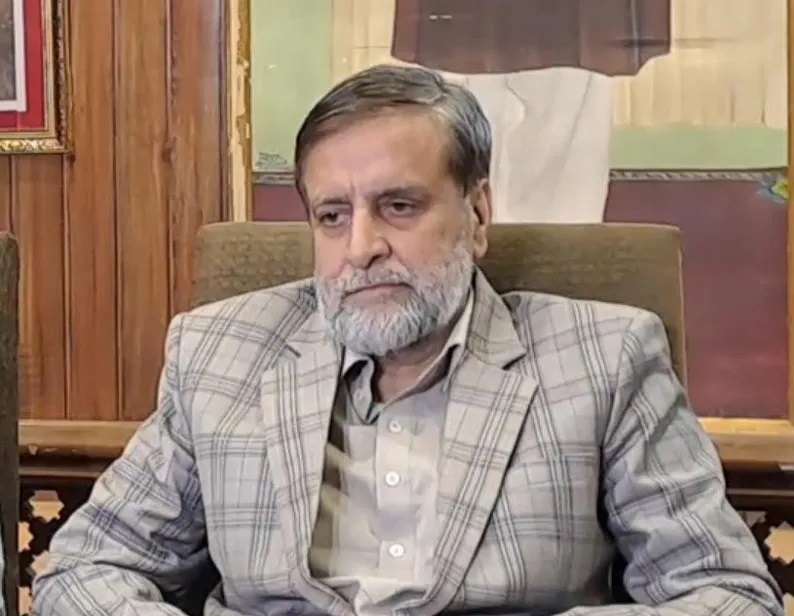
Today in Parliament, MP Mian Altaf Ahmad Larvi raised strong concerns about the ongoing changes in India’s flagship rural jobs programme, MGNREGA (Mahatma Gandhi National Rural Employment Guarantee Act), as the Lok Sabha debated the Viksit Bharat‑Guarantee for Rozgar and Ajeevika Mission (Gramin) Bill, 2025 (VB‑G RAM G), which seeks to replace MGNREGA.
Speaking from the Lok Sabha floor, the National Conference MP criticised the government’s move to phase out the long‑standing employment guarantee scheme that has been a vital lifeline for rural workers. He argued that the proposed replacement dilutes the original promise of a legal “right to work” by rebranding and restructuring the programme, and voiced concerns that it would undermine the social and economic security that MGNREGA provided to millions of rural households.
Mian Altaf emphasised that many rural families still depend heavily on guaranteed work for their livelihood, and claimed that the shift away from MGNREGA’s framework could lead to uncertainty and hardship for workers, especially in areas like Jammu and Kashmir where rural employment opportunities are limited. He also highlighted the sentimental and historical significance of MGNREGA’s name and its connection to Mahatma Gandhi’s legacy, which many in the opposition see as being weakened by the new bill.
The parliamentary debate on the VB‑G RAM G Bill has been intense, with opposition MPs staging protests and tearing copies of the bill on the Lok Sabha floor in objection to the changes and the removal of Gandhi’s name from the scheme. The bill, which was passed by the Lok Sabha today and proposes increasing the statutory guarantee of rural work from 100 days to 125 days per year, has sparked a wider political dispute over rural employment policy and the future of welfare legislation in India.
Mian Altaf’s intervention reflects broader opposition concerns that the new legislation could weaken legal guarantees and shift responsibilities more heavily onto state governments, potentially reducing the effectiveness of rural job assurance for the most vulnerable.