






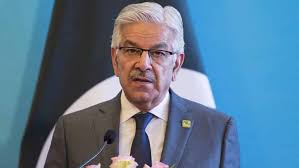
ISLAMABAD: Pakistan’s Defence Minister Khawaja Asif has said that the inclusion of other Arab countries in the mutual defence agreement between Pakistan and Saudi Arabia is not ruled out, emphasizing that “doors are not closed” for such developments.
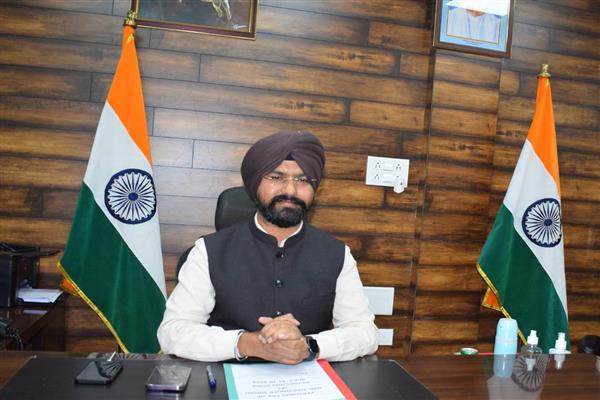
The agreement, signed on Wednesday by Prime Minister Shehbaz Sharif and Saudi Crown Prince Mohammed bin Salman during Sharif’s one-day visit to the Gulf Kingdom, establishes a “strategic mutual defence” pact. It stipulates that any attack on either country will be considered “an aggression against both,” according to a joint statement.
The pact comes shortly after an Israeli strike on the Hamas leadership in Qatar, a key US ally in the region.
Responding to questions about whether additional Arab nations could join the agreement, Asif said, “I cannot prematurely answer this, but I will definitely say the doors are not closed.”
In an interview with Geo News on Tuesday, Asif reiterated his long-standing call for a NATO-like arrangement, citing Pakistan’s vulnerability. “It is a fundamental right of countries, particularly Muslim nations, to jointly defend their region and populations,” he said.
Asif clarified that the agreement does not preclude other nations from joining, nor does it prevent Pakistan from signing similar pacts with others. Asked whether Pakistan’s nuclear assets could be used under the pact, he confirmed: “What we have, our capabilities, will absolutely be available under this pact.” He emphasized that Pakistan has always offered its nuclear facilities for inspection and has never violated commitments.
On whether an attack on one country would trigger involvement of the other, Asif replied, “Yes, absolutely. There is no doubt in this.” He stressed that the agreement is defensive rather than aggressive, likening it to NATO.
He also noted that Pakistan has long trained Saudi forces, and this pact formalizes that cooperation. “If there is aggression against either Saudi Arabia or Pakistan, we will jointly defend against it,” he said, recalling that Pakistan has maintained a significant military and air force presence in the kingdom for decades.
External Affairs Ministry spokesperson Randhir Jaiswal said India would examine the pact’s implications for national security, regional stability, and global peace. “The government remains committed to protecting India’s national interests and ensuring comprehensive security in all domains,” he added.
On whether the US was consulted, Asif said there was “no ground or justification” for involving a third party, stressing that the agreement is defensive, not hegemonic. “We have no plans to conquer territory or attack anyone. But our fundamental rights cannot be denied, and we exercised them yesterday,” he said. He also described the protection of Saudi Arabia’s holy Islamic sites as a “sacred duty” for Pakistan.
Addressing terrorism, Asif reiterated Pakistan’s claims that Afghan soil is being used for attacks on its security forces. “We were drawn into two wars in Afghanistan. The US left both times, and we are still dealing with the consequences, be it the Taliban, TTP, BLA, or others,” he said. Calling Afghanistan a “hostile country,” he added, “The Kabul government is not innocent in this; we are being blackmailed through these actors.”
Asked if Arab states might respond to Afghan aggression, Asif said he would not oppose it.
The joint statement issued by Islamabad and Riyadh highlighted that the pact “reflects the shared commitment of both nations to enhance their security and to achieve peace in the region and the world.” The timing, following an Arab summit emphasizing collective security after Israel’s attack on Qatar, underscores the accord’s relevance to current regional dynamics.
The agreement marks the most significant upgrade in Pakistan-Saudi defence ties in decades, according to Dawn. Cooperation dates back to 1967 and deepened after the 1979 Grand Mosque seizure, when Pakistani special forces helped Saudi troops reclaim Masjid al-Haram. A 1982 Bilateral Security Cooperation Agreement formalized ongoing training, advisory support, and deployments. At times, up to 20,000 Pakistani troops were stationed in the kingdom, which also became a major buyer of Pakistani arms.
In recent years, regional instability has heightened the partnership’s importance. In February, a meeting of the Joint Military Cooperation Committee in Riyadh pledged to expand training and exchanges.