






United Nations: Pakistan has once again attempted to justify terrorism by portraying the terrorist groups it sends to attack India as so-called “freedom fighters” — a claim India strongly denounced as “doublespeak and hypocrisy” from the “epicentre of global terrorism.”
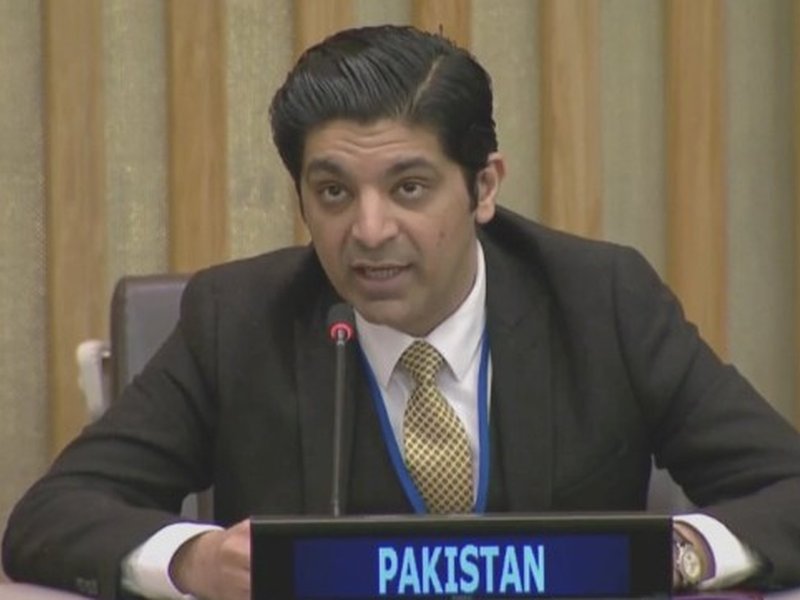
Addressing the UN on Wednesday, Muhammad Jawad Ajmal, a Counsellor at Pakistan’s UN Mission, claimed that nations must “distinguish between terrorism and the exercise of the legitimate right of people to resist foreign occupation.” He asserted that such a distinction exists in international law and referenced UN General Assembly Resolution 46/51.
However, Ajmal’s argument distorts international law. The 1994 UN General Assembly Declaration clearly states that “criminal acts intended or calculated to provoke a state of terror in the general public, a group of persons or particular persons for political purposes are unjustifiable under any circumstances.” This position was reaffirmed by a 2004 UN Security Council resolution and the 1999 International Convention for the Suppression of the Financing of Terrorism.
While Resolution 46/51 (adopted in 1991) briefly mentions liberation movements, it unequivocally condemns all acts of terrorism, “wherever and by whomever committed,” and urges all nations to “refrain from participating in terrorist acts in other states.”
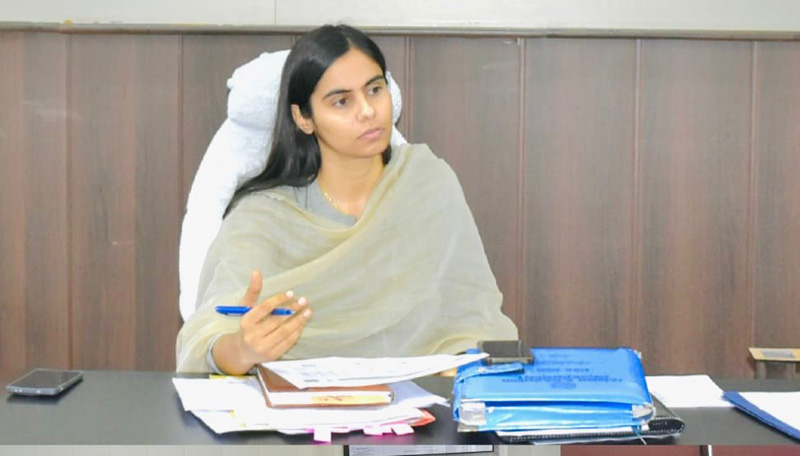
Responding sharply, Raghoo Puri, First Secretary at India’s UN Mission, said, “Terrorism is among the gravest of offences that fundamentally violates the core of humanity. It represents the worst of bigotry, violence, intolerance and fear — and terrorists are the worst of the worst in humankind.”
He added, “Pakistan’s doublespeak and hypocrisy stand exposed. It remains a well-known epicentre of terrorism, with links to numerous attacks across the world targeting innocent civilians.”
Ajmal’s remarks came during an interactive dialogue with Ben Saul, the UN Special Rapporteur on the Promotion and Protection of Human Rights while Countering Terrorism, at the UN General Assembly’s Third Committee.
Negotiations on the Comprehensive Convention on International Terrorism — proposed by India — have been stalled for nearly two decades, primarily due to Pakistan and a small group of countries insisting that some terrorists be recognised as “freedom fighters.”
Ajmal also alleged that India’s counterterrorism measures violate human rights, and criticised the UN’s counterterrorism framework for “singling out one religion.”
Puri rebutted those claims, stating, “Terrorism is the gravest threat to humanity, and its abettor and aider, like Pakistan, remain the worst violators of human rights.” He added that Pakistan’s attempt to hide behind claims of Islamophobia was nothing more than “a futile effort to mask its own atrocities.”