






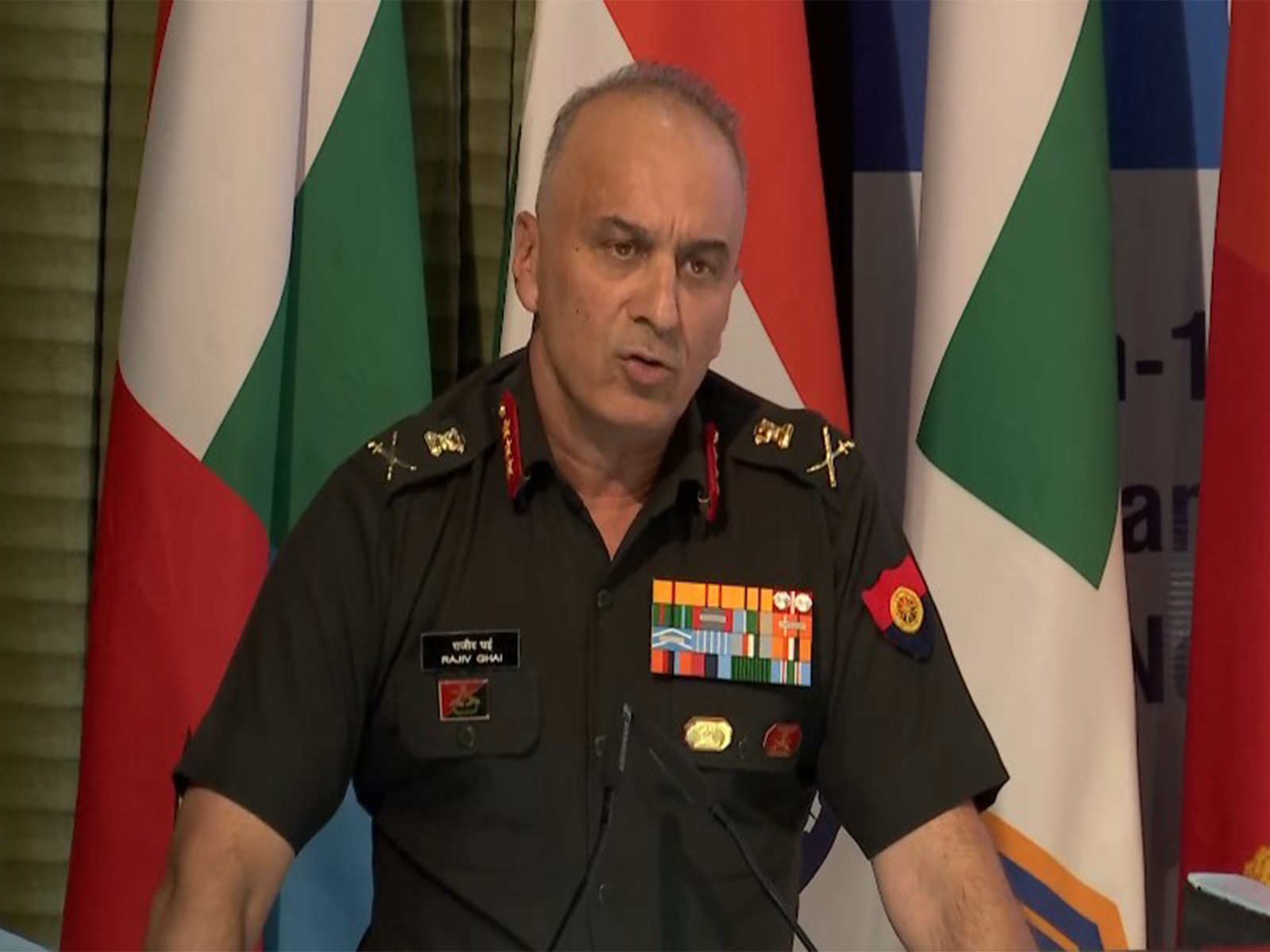
New Delhi — Pakistan suffered more than 100 military fatalities along the Line of Control during Operation Sindoor, India’s Director General of Military Operations, Lt Gen Rajiv Ghai, said on Tuesday, citing Pakistan’s own list of posthumous awards. He added that Pakistan lost at least 12 aircraft during the May conflict, echoing figures recently shared by Chief of Air Staff Air Chief Marshal A. P. Singh.
Lt Gen Ghai warned that the Indian Navy was prepared to act if hostilities continued, saying further escalation from Pakistan could have had catastrophic consequences not only at sea but across other domains as well.
Describing the May 7–10 exchanges, he said Pakistan began cross-border firing immediately after India struck nine terrorist targets on May 7. He suggested that Pakistan’s August 14 release of an awards list inadvertently revealed the scale of its casualties on the LoC.
“We went after terrorists, and once that had been achieved, it wasn’t our intention to escalate it unless compelled to do so,” Lt Gen Ghai said, adding that Pakistan initiated cross-border firing once the terror targets were engaged.
He characterized Pakistan’s subsequent drone attacks against India as “a dismal failure,” saying a range of drones was deployed in an attempt to inflict casualties and damage but achieved little. The drone incidents, he said, prompted the Indian Air Force to carry out precision strikes on Pakistani installations on the night of May 9–10.
“We struck 11 of their air bases — damaging eight bases, three hangars and four radars — and destroyed Pakistani air assets on the ground,” he said. He detailed Pakistani losses as including a C-130 class transport, an AEW&C aircraft, and four to five fighter jets. He also claimed that a ground-to-air kill occurred at a record distance of more than 300 kilometres and that five high-tech fighters were hit.
Operation Sindoor was launched on May 7 in response to the Pahalgam terror attack and targeted terrorist infrastructure in Pakistan-controlled territory. The strikes led to four days of intense clashes that subsided after an understanding to stop military action on May 10.
Lt Gen Ghai also recounted the June elimination of the three terrorists responsible for the Pahalgam attack, saying the Army was determined to pursue them relentlessly. “It took us 96 days but we did not let them rest,” he said, describing the militants as exhausted and malnourished when found.
On the broader strategy, Lt Gen Ghai said India’s approach to terrorism has undergone a doctrinal shift, aligning with the prime minister’s statements: terror attacks are acts of war and will be met with decisive retaliation; India will not bow to nuclear blackmail; and no distinction will be made between terrorists and those who sponsor them.