






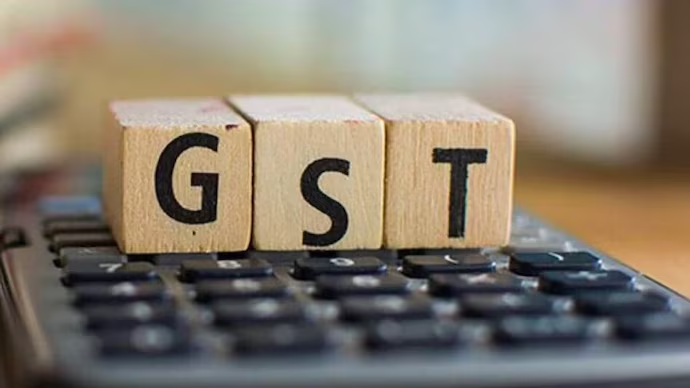
NEW DELHI: The government is planning major reforms in the GST structure for automobiles, aimed at ending disputes over vehicle classification based on engine size and length, and making cars more affordable, sources said.
At present, automobiles fall in the highest GST slab of 28 per cent, along with a compensation cess of 1–22 per cent depending on the type of vehicle. This takes the total tax burden from about 29 per cent on small petrol cars to nearly 50 per cent on SUVs. Electric vehicles, however, attract only 5 per cent GST.
Under the Centre’s proposal to shift to a simplified two-tier GST regime of 5 and 18 per cent, with a 40 per cent slab for a handful of items, automobiles will be moved into a uniform category. This is expected to resolve classification disputes and reduce prices, boosting demand and consumption — a key objective of the overhaul.
The plan, which also does away with the current 12 and 28 per cent slabs, will be reviewed by the Group of Ministers on GST rate rationalisation on August 21. A final decision is likely when the GST Council, comprising the Centre and state finance ministers, meets next month.
At present, GST has four slabs — 5, 12, 18 and 28 per cent — with essentials taxed at nil or 5 per cent, and luxury/sin goods at 28 per cent. The Centre has suggested retaining only two slabs — 5 and 18 per cent — while keeping a 40 per cent rate for about 5–7 items.