






Glacial Lake Outburst Floods Pose Major Threat to Kishtwar, Warns Risk Assessment
Jammu: Glacial lake outburst floods (GLOFs) present a serious danger to Kishtwar district in Jammu and Kashmir, threatening lives, infrastructure, and the fragile local ecosystem, according to a comprehensive risk assessment.
The GLOF Management Plan for Kishtwar 2024-25 identifies the tehsils of Padder, Machail, Dachhan, Marwah, and Warwan as the most vulnerable due to their proximity to glacial lakes. The report also highlights that the Kishtwar High Altitude National Park remains at high risk from sudden flooding events.
“These regions are especially susceptible to sudden floods, which could have devastating impacts on communities, infrastructure, and the environment,” the report warned.
The threat is not merely theoretical. On August 14, Chishoti village in Padder tehsil, the last motorable point before the Machail Mata temple, was devastated by a cloudburst-triggered flash flood, resulting in 65 deaths and over 115 injuries during the pilgrimage.
Critical infrastructure—including roads, schools, hospitals, and government buildings—in these tehsils is “at considerable risk,” the report added. Marwah and Warwan, often called “Shadow Areas” due to remoteness, house low-lying settlements and agricultural communities with limited disaster preparedness, increasing their vulnerability.
Hydroelectric projects under CVPPL Limited, such as Pakal Dul, Kiru, Kwar, and Dangduru, are also at risk. Rising water levels or potential dam breaches could threaten project operations and elevate downstream flood risk.
The report flagged significant ecological concerns, noting that floodwaters could contaminate local water sources, endanger public health, and threaten habitats and biodiversity in Kishtwar High Altitude National Park.
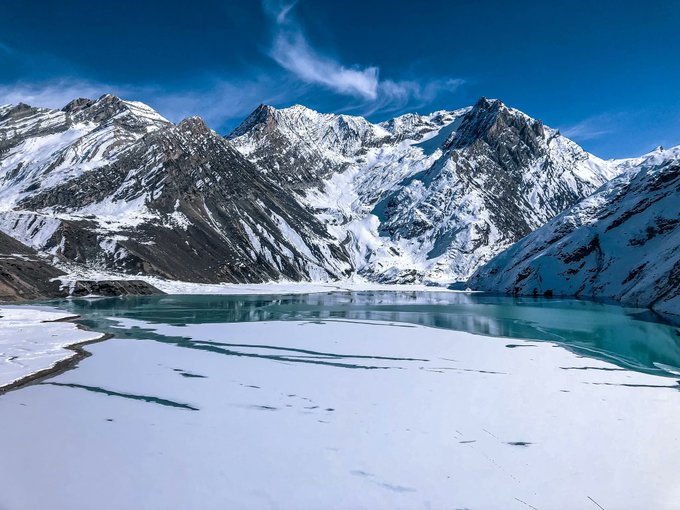
High-risk lakes include Mundiksar and Hangu, while Palta Pani and another unnamed lake are categorized as moderate-risk. The report explains that the presence of multiple glacial lakes at varying elevations heightens the risk of outburst floods, which could be triggered by rapid ice melt, landslides, or seismic activity.
Kishtwar, situated in the Western Himalayas, has 197 glacial lakes—the highest in Jammu and Kashmir—accounting for over a third of all glacial lakes in the Union Territory. Many lakes are small, but climate change has accelerated their growth in recent decades, raising the risk of GLOFs.
The report calls for immediate mitigation measures, including continuous monitoring, early warning systems, drainage and reinforcement of moraine dams, risk mapping, and community preparedness. “Local communities must be educated about GLOF risks and trained in emergency response,” it emphasized.
For the long term, the plan recommends climate-resilient construction, afforestation to stabilize slopes, and ongoing research on glacial dynamics. It also suggests allocating a portion of District Planning and Development Council funds specifically for GLOF preparedness.
“Our commitment to safeguarding lives and infrastructure against GLOFs reflects a broader vision of building a resilient future for Kishtwar,” the report concluded. “Through sustained efforts, we can mitigate the risks posed by natural hazards and create a safe environment for current and future generations.”