






Supreme Court Refers AYUSH-Allopathy Parity Issue to Larger Bench
NEW DELHI: The Supreme Court has referred to a larger bench the question of whether doctors practising indigenous systems of medicine—such as Ayurveda, Unani, and Homeopathy—can be treated on par with allopathic doctors in matters of service conditions, retirement age, and pay scales.
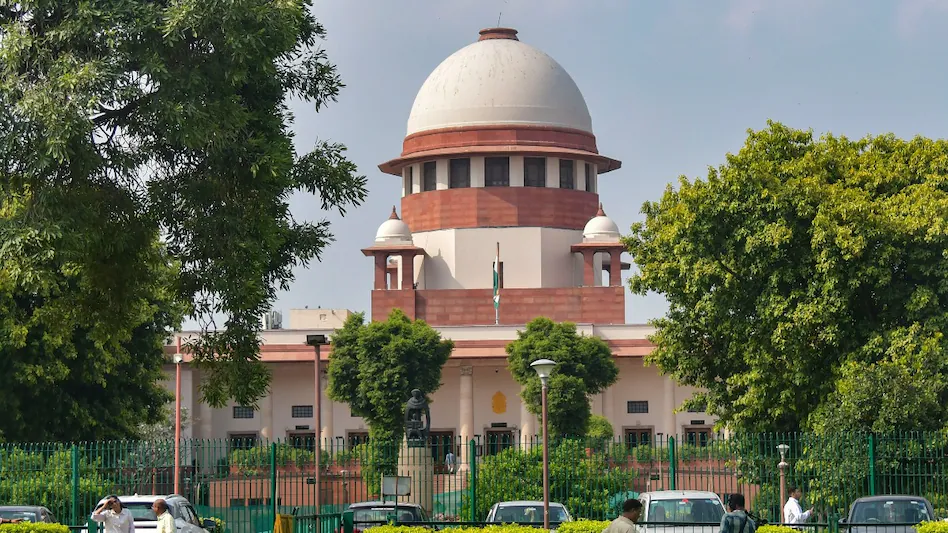
A bench of Chief Justice B.R. Gavai and Justice K. Vinod Chandran, which had reserved its order on May 13, delivered its ruling on October 17, stating that there exists a “divergence of opinion” on whether practitioners of AYUSH and allopathy can be equated for service benefits. The court said the issue therefore requires an authoritative pronouncement.
The term allopathy, the court noted, was coined by homeopathy founder Samuel Hahnemann to describe the then-prevalent system of modern medicine.
Referring to earlier judgments that had taken conflicting views on the issue, the bench said it could not ignore the submission of various states that extending the retirement age for allopathic doctors was meant to address a shortage of experienced practitioners in that field.
“The dearth of medical practitioners exists primarily in allopathy, not in indigenous systems, especially since critical life-saving and surgical interventions are not performed by AYUSH doctors,” the court observed.
Accordingly, the matter has been referred to a larger bench, and the registry has been directed to place the case before the Chief Justice of India for further orders.
Interim Relief
Pending the larger bench’s decision, the Supreme Court allowed states and authorities to temporarily continue AYUSH practitioners beyond their current retirement age—up to that applicable to allopathic doctors—but only on a temporary basis and without regular pay and allowances.
If the larger bench rules in favour of AYUSH doctors, they will be entitled to full pay and benefits for the extended period. Those not retained in service would still receive arrears if the issue is ultimately decided in their favour.
AYUSH doctors allowed to continue in service during the interim period are to be paid half of their salary and allowances, which will later be adjusted based on the final outcome.
Background of the Case
The bench was hearing 31 petitions on the matter, represented by several lawyers, including Solicitor General Tushar Mehta for the Rajasthan government and Ashwini Upadhyaya for some Ayurvedic practitioners.
The issue arose after the Rajasthan government, citing a shortage of allopathic doctors, increased their retirement age from 60 to 62 years effective March 31, 2016. This led to litigation by government AYUSH doctors seeking parity.
On February 28, the Rajasthan High Court ruled in favour of AYUSH doctors, holding that they too should retire at 62, and ordered reinstatement of those who had retired at 60 but had not yet reached 62. The court found the differentiation in retirement age discriminatory under Article 14 of the Constitution (right to equality).
The state government appealed to the Supreme Court, arguing that the extension was specific to address the shortage of modern medicine practitioners and was not required for AYUSH doctors, whose numbers were sufficient.
The Supreme Court initially questioned the need to interfere with the High Court’s ruling but later agreed to examine the matter after Solicitor General Mehta pointed out that nearly 1,000 AYUSH doctors could be reinstated as a result of the High Court’s order.