







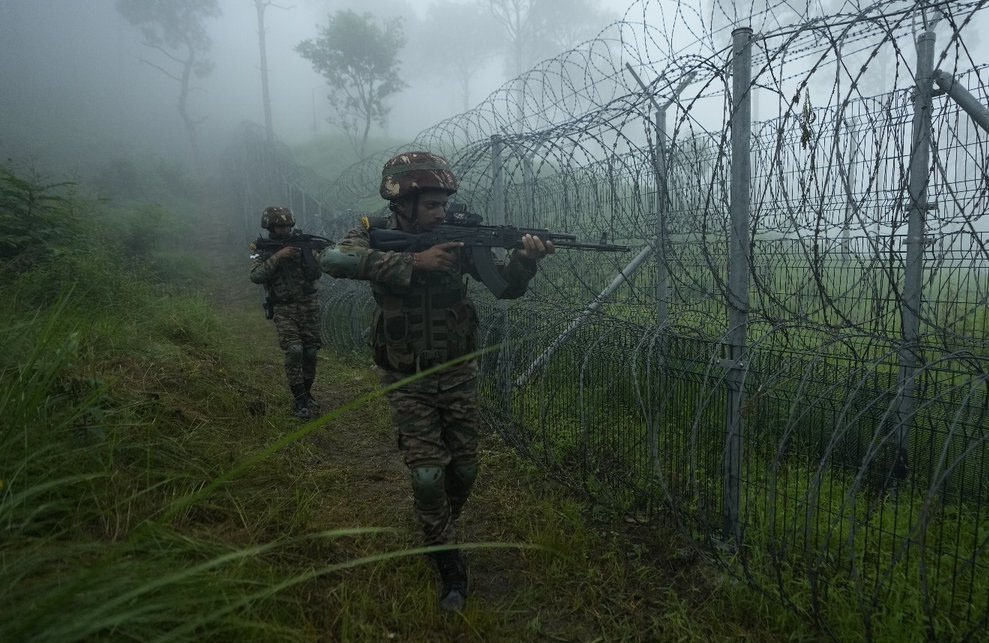
Sunderbani: Keeping pace with rapid advancements in AI-driven technology, the Indian Army has upgraded its border security along the Line of Control (LoC) in Rajouri district, Jammu and Kashmir, with cutting-edge equipment such as smart fence systems, robotic mules, and all-terrain vehicles, officials said.
The new arsenal, including quadcopters, advanced surveillance tools, bulletproof vehicles, modern weapons, and night-vision devices, was successfully tested during Operation Sindoor (May 7–10). During this operation, the Army carried out missile strikes on terror infrastructure in Pakistan and Pakistan-occupied Kashmir (PoK) in retaliation for the April 22 Pahalgam attack, effectively countering enemy actions.
Ahead of Independence Day, visiting media were given a rare glimpse of the Army’s readiness in Sunderbani. A three-layered security system has been activated, with intensified patrolling to ensure peaceful celebrations along the border.
Advanced vehicles like the Armado and other all-terrain units provide the Army’s quick-reaction teams the agility to navigate rugged terrain and dense foliage, enabling swift neutralisation of threats, particularly infiltrating terrorists. During a demonstration, soldiers showcased area cordoning and engagement tactics, highlighting the vehicles’ speed, protection, and adaptability.
The Mahindra Armoured Light Specialist Vehicle (ALSV), or Armado, is a lightweight, air-transportable armoured vehicle designed for the Army and special forces. The indigenously-developed Robotic Mule (MULE – Multi-Utility Legged Equipment), designed by AeroArc under the “Make in India” initiative, is a quadrupedal robot capable of operating in snow, deserts, water, and other challenging terrains. It played a key role in surveillance and logistics during Operation Sindoor, transporting supplies, detecting explosives, conducting reconnaissance, and even operating in swarms to form a “mini robot army,” enhancing operational efficiency while reducing risks to soldiers.
Drones, including Mini UAVs and Surveillance Drones, have become central to Army operations, monitoring sensitive areas and engaging targets with precision-dropping mechanisms for grenades and improvised explosive devices (IEDs), minimizing soldier exposure.
The Army’s Battle Obstacle Course (BOC) tests endurance, strength, and combat readiness, simulating battlefield conditions such as jungle operations and bunker-busting exercises. Infantry units demonstrated capturing enemy bunkers, moving through rugged terrain, breaching defences, and neutralising threats. The BOC sharpens coordination, speed, tactical skills, and overall combat effectiveness.
Patrolling along the LoC has been intensified with a three-layered security system, drones monitoring enemy movements, and additional security measures including dog squads and detectors to prevent terrorist disruption of Independence Day celebrations. This marks the first Independence Day post-Operation Sindoor, following the destruction of multiple terrorist camps.
A defence spokesperson highlighted the soldiers’ dedication: “Beyond their uniforms, each soldier embodies duty and pride in safeguarding the homeland. Despite extreme weather, isolation, and constant vigilance, they display remarkable resilience, rigorous training, and unwavering commitment.”
The spokesperson also noted the Army’s engagement with local communities, ensuring peace and development reach even the most remote areas, reflecting its continuous evolution, operational readiness, and dedication to both national security and civilian welfare.