






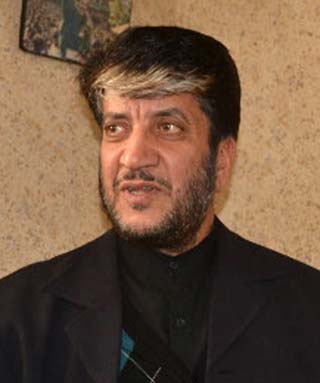
New Delhi: The Supreme Court on Monday observed that “pelting of stones in Jammu and Kashmir is not an ordinary act” while hearing a plea by separatist leader Shabir Ahmed Shah seeking access to his detention orders. The court advised him to approach the Jammu and Kashmir government for the same.
A bench comprising Justices Vikram Nath and Sandeep Mehta granted the National Investigation Agency (NIA) three weeks to respond to Shah’s fresh affidavit after Solicitor General Tushar Mehta highlighted new claims and reiterated Shah’s alleged links with Pakistan-based terror outfits.
Appearing for Shah, senior advocate Collin Gonsalves told the court that Shah’s family had not been provided copies of the detention orders and sought access to all such orders issued since 1970. Mehta, however, opposed the request, arguing that the issue had not been raised before the Delhi High Court.
“You should ask the government to provide these details — why raise it in bail proceedings? It’s been over 50 years,” the bench remarked.
Gonsalves further submitted that Shah had spent nearly 39 years in jail, mostly over charges linked to speeches allegedly followed by incidents of stone pelting. Responding to this, Justice Mehta observed, “Pelting of stones in this state is not a very ordinary action.”
Earlier, the Supreme Court had refused to grant interim bail to Shah in a terror-funding case but had sought a response from the NIA within two weeks on his plea challenging the Delhi High Court’s June 12 order denying him bail. The high court had rejected his bail plea, citing the risk of him engaging in similar unlawful activities or influencing witnesses.
Shah was arrested by the NIA on June 4, 2019, in connection with a 2017 terror-funding case against 12 accused persons for allegedly conspiring to raise funds through hawala and cross-LoC trade to finance stone pelting, damage public property, and wage war against India.
The NIA alleged that Shah played a “substantial role” in promoting separatist activities in Jammu and Kashmir — including inciting the public with anti-India slogans, glorifying slain militants as martyrs, and receiving funds from Pakistan-based sources.
While denying him bail, the Delhi High Court had held that the right to freedom of speech and expression does not permit inflammatory or seditious speeches that threaten public order or national integrity.
“This right cannot be misused under the pretext of holding rallies or delivering speeches that provoke unlawful activities detrimental to the nation’s integrity,” the court had said, while also rejecting Shah’s alternative plea for house arrest.
The high court had noted that Shah is the chairman of the banned Jammu and Kashmir Democratic Freedom Party (JKDFP) and faces 24 pending criminal cases of similar nature, many related to secessionist activities and conspiracy against the Indian state.