







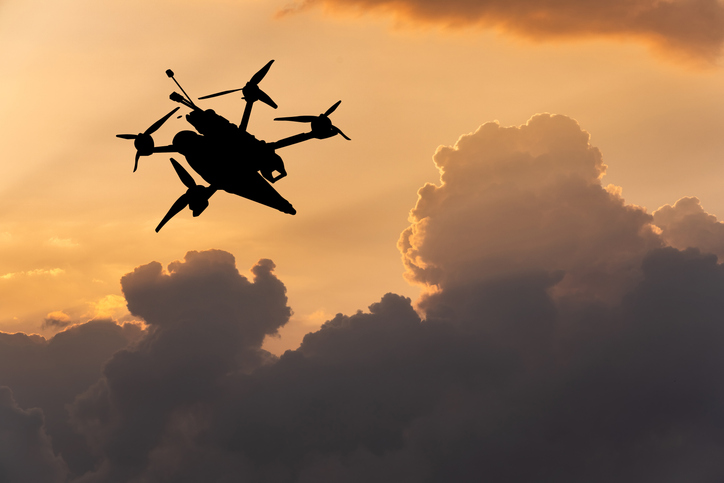
The U.S. Army plans a massive expansion of its drone inventory, targeting at least one million drones within the next two to three years and potentially purchasing anywhere from several hundred thousand to multiple millions annually after that, Army Secretary Daniel Driscoll told Reuters.
Driscoll acknowledged the scale of the effort — the Army currently procures roughly 50,000 drones a year — but said the service is capable of meeting the challenge. Speaking by phone from Picatinny Arsenal, he described experiments with countermeasures such as “net rounds” that capture drones, as well as new explosives and electromagnetic tools integrated into weapons systems.
Both Driscoll and Picatinny commander Major General John Reim said lessons from Russia’s war in Ukraine — where drones have been deployed on an unprecedented scale — are informing U.S. planning. Driscoll noted that Ukraine and Russia each produce about 4 million drones annually, and that China likely produces more than twice that number.
A central goal, Driscoll said, is to ensure the United States can ramp up production in a future conflict by building a resilient domestic supply chain for components like brushless motors, sensors, batteries and circuit boards — many of which are currently manufactured in China. “We expect to purchase at least a million drones within the next two to three years,” he said. “And we expect that at the end of one or two years from today, we will know that in a moment of conflict, we will be able to activate a supply chain that is robust enough and deep enough that we could activate to manufacture however many drones we would need.”
Driscoll also wants to shift how the Army views drones — treating them as largely expendable munitions rather than rare, high-end systems. The Pentagon has been pursuing several initiatives to accelerate drone acquisition, including the 2023 Replicator initiative aimed at fielding thousands of autonomous drones by August 2025, though officials have not provided a recent status update. Reuters has reported that the Pentagon’s DOGE unit is spearheading efforts to buy tens of thousands of low-cost drones in the near term, and lawmakers have proposed legislation to create a Texas facility capable of producing up to 1 million drones per year.
Rather than concentrate production in a single, large facility, Driscoll said the Army prefers spreading funding across multiple manufacturers, including firms that build drones with commercial uses such as package delivery. He also said he was confident the service has adequate funding and noted the Army is already divesting some older weapons systems to free resources — a process that typically requires buy-in from lawmakers protecting programs in their districts.
“Drones are the future of warfare, and we’ve got to invest in both the offensive and defense capabilities against them,” Driscoll said, underscoring the service’s push to both expand its drone inventory and harden defenses against adversary unmanned systems.