







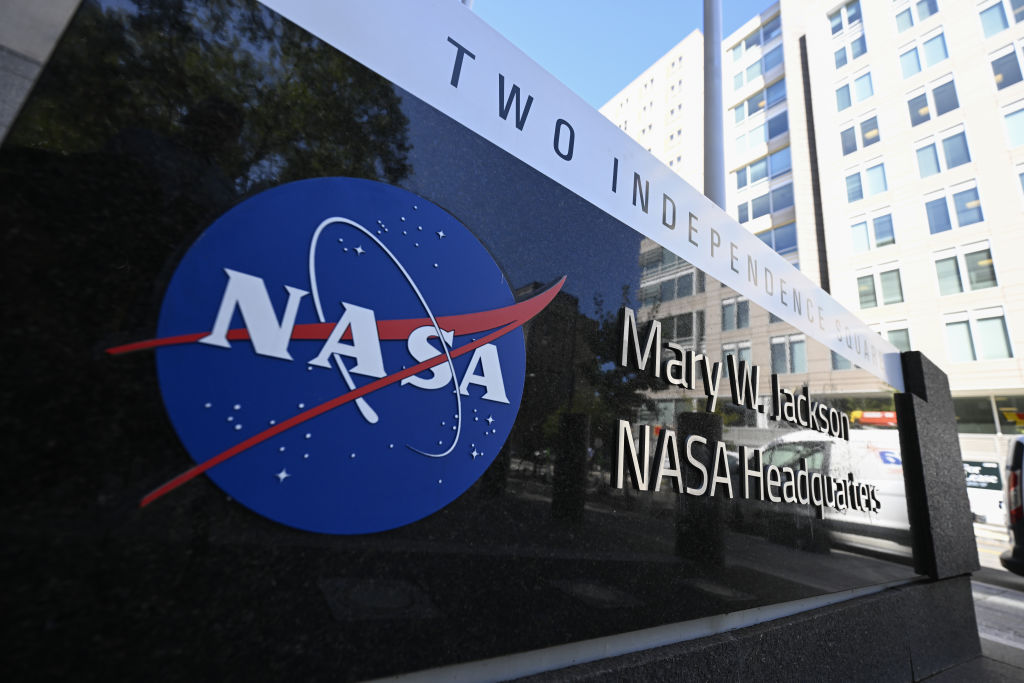
NASA announced on Monday that it is reopening its high-profile lunar lander contract to new bidders, citing delays faced by Elon Musk’s SpaceX in developing its Starship lander.
The decision could give rivals such as Jeff Bezos’ Blue Origin an opportunity to compete for the historic mission to land astronauts on the moon for the first time in over 50 years.
“I’m in the process of opening that contract up. I think we’ll see companies like Blue [Origin] get involved, and maybe others,” said Sean Duffy, NASA’s acting administrator and U.S. Transportation Secretary, during an interview with Fox News’ Fox & Friends.
The announcement follows growing internal pressure on NASA to accelerate its Artemis program amid China’s advancing lunar ambitions, which aim to put humans on the moon by 2030. The move marks a major policy shift and signals the start of a new competitive phase for NASA’s crewed lunar lander project—just two years before the planned landing.
Blue Origin is expected to bid for the newly opened mission, while Lockheed Martin has also expressed interest in forming an industry coalition to respond to NASA’s call.
SpaceX was awarded the lunar lander contract in 2021, now valued at $4.4 billion, for a 2027 moon landing as part of the Artemis 3 mission. However, NASA advisers warn that the project may face years of delays due to competing priorities. Musk has described Starship as key to future missions, including Mars expeditions and expanded satellite launches.
“They do remarkable things, but they’re behind schedule,” Duffy said of SpaceX’s progress, adding that President Donald Trump wants the moon landing to happen before his current term ends in January 2029.
The contract review comes amid leadership changes at NASA and renewed discussions over appointing a permanent administrator. Jared Isaacman, a billionaire astronaut and SpaceX ally, is reportedly back in consideration for the role after Trump withdrew his nomination earlier this year.
Responding to NASA’s decision, Musk appeared unfazed. “SpaceX is moving like lightning compared to the rest of the space industry,” he wrote on X (formerly Twitter). “Starship will end up doing the whole Moon mission. Mark my words.”
The Artemis 3 mission would mark humanity’s first lunar landing since Apollo 17 in 1972.
Blue Origin, meanwhile, is developing its Blue Moon lander in Florida under a separate $3 billion NASA contract for later Artemis missions. The company had previously protested NASA’s 2021 decision to award the first lander contract solely to SpaceX and spent years lobbying for additional competition.
Duffy’s comments suggest Blue Origin may now have another shot at Artemis 3. NASA has requested both SpaceX and Blue Origin to submit updated, accelerated moon-landing plans by October 29. “NASA is also requesting proposals from the broader commercial space sector to help increase the pace of lunar missions,” an agency spokesperson said.
Lockheed Martin confirmed its intent to participate. “We have been conducting significant technical and programmatic analysis for human lunar landers,” said Bob Behnken, vice president for Exploration and Technology Strategy and a former NASA astronaut.
NASA’s multibillion-dollar Artemis program includes several missions designed to establish a sustained human presence on the moon. While Artemis 3 is planned for 2027, Artemis 2—a 10-day lunar flyby using systems built by Boeing, Northrop Grumman, and Lockheed Martin—is currently on track for April and could be moved up to February.
Both SpaceX and Blue Origin declined to comment on NASA’s latest decision.