






Supreme Court Vows to Act Firmly Against ‘Digital Arrest’ Scams; Terms Rs 3,000-Crore Fraud ‘Shocking’
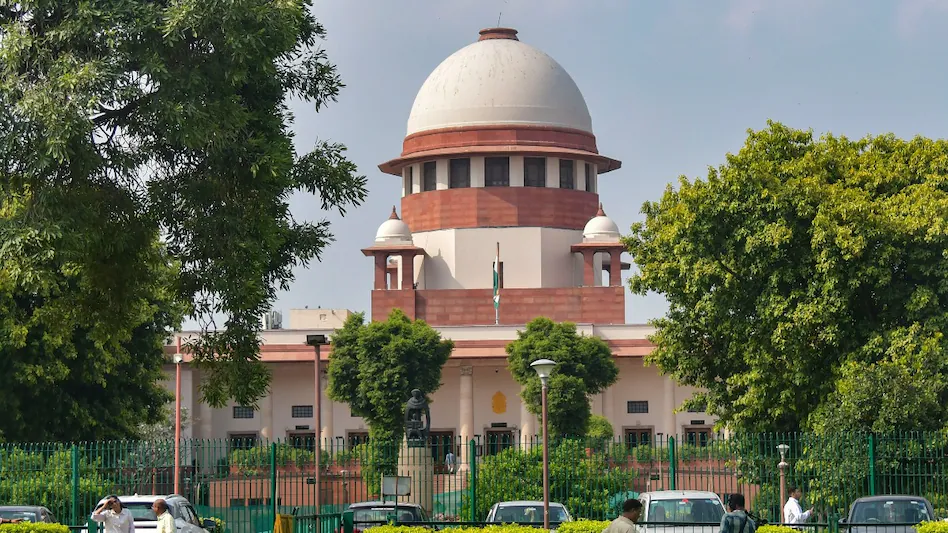
New Delhi: The Supreme Court on Monday expressed deep shock over the scale of “digital arrest” scams across India, where cybercriminals have allegedly extorted more than ₹3,000 crore from victims, including senior citizens. The court said it would deal with such crimes “with an iron hand.”
Digital arrest is a growing cybercrime in which fraudsters impersonate law enforcement officials, court officers, or government agency personnel to intimidate victims through audio and video calls. They often show fake legal documents and coerce victims into paying money.
A bench comprising Justices Surya Kant, Ujjal Bhuyan, and Joymalya Bagchi, which examined sealed-cover reports from the Ministry of Home Affairs (MHA) and the Central Bureau of Investigation (CBI), appointed an amicus curiae to assist in the case.
“It is shocking that over ₹3,000 crore have been collected from victims, including senior citizens, across the country. If we don’t pass stringent and harsh orders, this menace will only grow. We must strengthen the hands of our agencies through judicial orders. We are determined to deal with these crimes with iron hands,” the bench observed.
The matter will be heard next on November 10, when the court is expected to issue directions based on the amicus curiae’s suggestions.
Justice Kant noted that, according to the CBI, several syndicates behind these scams operate from offshore locations, running “scam compounds” with dedicated financial, technical, and human infrastructure.
Solicitor General Tushar Mehta, appearing for the Centre and the CBI, informed the court that the MHA’s cybercrime division is actively handling such cases.
The Supreme Court took suo motu cognisance of a letter from an elderly woman in Ambala, Haryana, addressed to Chief Justice of India B.R. Gavai. In her letter, she alleged that she and her husband were subjected to a “digital arrest” by fraudsters posing as officials from the CBI, ED, and the judiciary, who extorted ₹1.05 crore from them in September using forged court orders.
Two FIRs have since been registered by Ambala’s cybercrime department under relevant sections of the Bharatiya Nyaya Sanhita (BNS).
Earlier, on October 27, the top court had indicated it might assign the CBI to investigate such cases nationwide, citing their magnitude and spread across multiple states. It sought details of FIRs filed across India and said it would monitor the CBI’s probe directly, issuing directions as required.
The court also asked the CBI to clarify whether it needs additional resources, including independent cyber experts, to strengthen its investigation.
On October 17, while addressing the rising number of online fraud cases—especially those involving fake judicial orders and “digital arrests”—the Supreme Court had remarked that such crimes strike at the “very foundation of public trust” in the justice system.
The bench underscored that forging Supreme Court or High Court orders and signatures of judges to extort citizens is a grave offence that cannot be treated as a mere act of cheating or routine cybercrime, but as an assault on the integrity of judicial institutions.