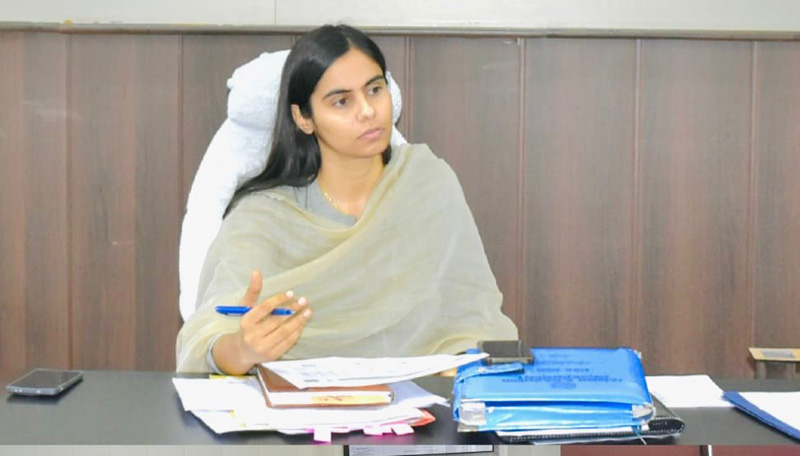








SRINAGAR: Chief Secretary, Atal Dulloo, today held an interactive meeting with the Group of Concerned Citizens (GCC) — a collective of distinguished retired civil servants from Jammu and Kashmir — led by former Advisor to the Governor, Khurshid Ahmad Ganai.
During the meeting, the Chief Secretary attentively listened to the concerns and suggestions shared by the GCC members on key developmental, environmental, and civic issues across the Union Territory. He commended the group for their constructive participation and noted that several of their recommendations are already under consideration or implementation at various administrative levels.
Mr. Dulloo directed the concerned departments to carefully examine the valuable insights provided by the retired officers, acknowledging their rich institutional experience and practical understanding of governance. He emphasized that such consultations strengthen administrative decision-making by aligning government initiatives with on-ground realities and public aspirations.
The meeting was attended by senior officers including the Additional Chief Secretary, PWD; Principal Chief Conservator of Forests (PCCF); Secretary, Health; Vice Chairman, LCMA; Commissioner, SMC; Chairperson, J&K Pollution Control Committee; and Chief Engineers of PWD, Jal Shakti, and Irrigation & Flood Control Departments.
The GCC delegation highlighted several priority areas demanding focused attention — particularly the scientific management of solid waste in Jammu and Srinagar. They called for a comprehensive waste treatment framework encompassing proper quantification and scientific disposal of legacy waste accumulated over the years.
The members also urged the administration to expedite flood mitigation measures for Srinagar, including enhancing the carrying capacity of the Flood Spill Channel and dredging Wular Lake to augment its water-holding potential — measures they described as vital for safeguarding lives and property in flood-prone zones.
Emphasizing environmental preservation, the GCC underscored the need to protect and rejuvenate water bodies — lakes, wetlands, and springs — describing them as integral to Kashmir’s ecology, heritage, and scenic identity.
In terms of urban mobility, the group advocated for engineering-based traffic management solutions instead of purely enforcement-led approaches. They suggested systematic removal of bottlenecks through improved road design and scientific planning interventions.
Health infrastructure also came under discussion, with specific proposals for repurposing the GB Pant Hospital facilities and expanding M&CCH Anantnag to strengthen healthcare services in South Kashmir.
Prominent GCC members who attended the meeting included Naseema Lankar, Lateef-uz-Zaman Deva, Kifayat Hussain Rizvi, S. Madni, G.J. Nehvi, A.R. Khan, Khaliq-uz-Zaman Bhat, Abdul Majeed Bhat, Iftikhar Hakeem, and Iftikhar Drabu.
Concluding the session, the Chief Secretary reiterated his appreciation for the GCC’s informed insights and assured that their recommendations would be duly forwarded to relevant departments for thorough examination and timely action. He also encouraged sustained dialogue between the GCC and government institutions to ensure that expert knowledge continues to guide Jammu and Kashmir’s development trajectory.