






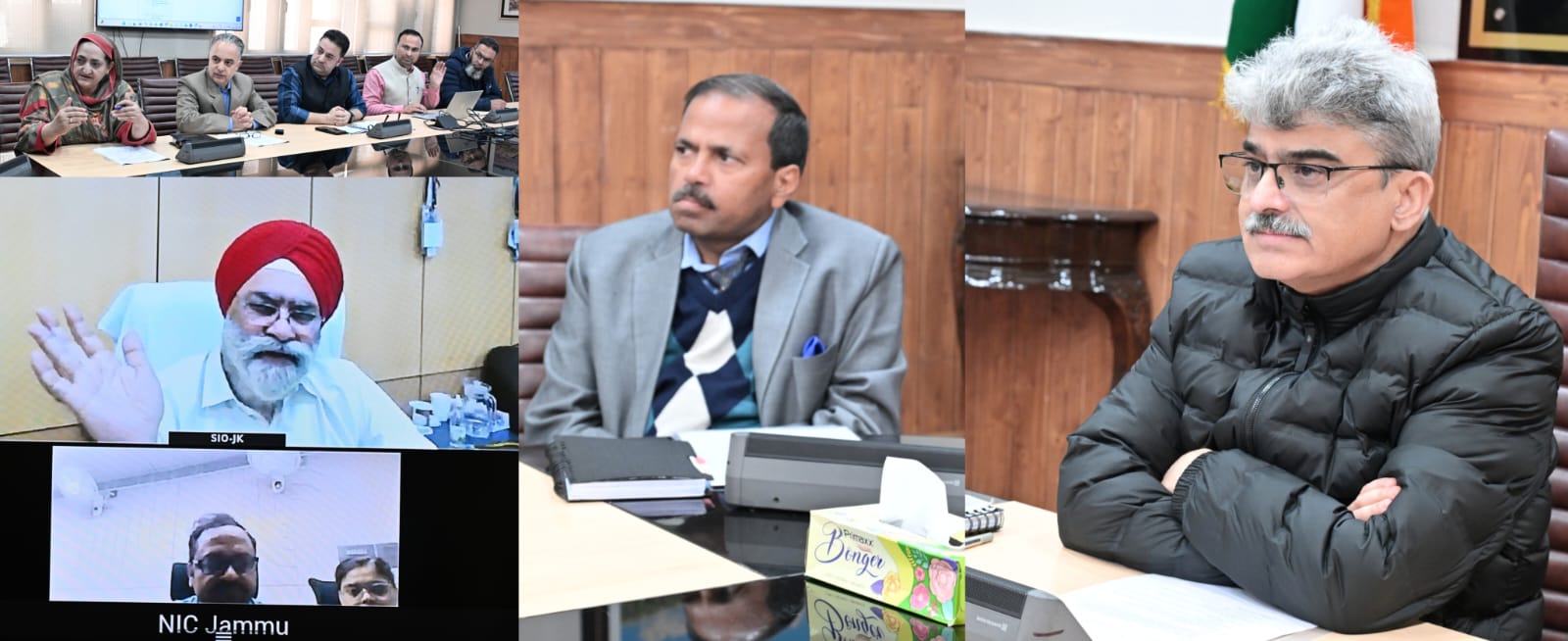
SRINAGAR: Chief Secretary Atal Dulloo on Monday chaired a high-level meeting to review the progress of a landmark reform aimed at digitizing and streamlining the entire process of framing, amending, and revising Recruitment Rules (RRs) across all government departments of Jammu and Kashmir.
Designed to enhance efficiency, transparency, and uniformity, the reform is set to transform how service rules are managed and approved in the Union Territory. The meeting was attended by Additional Chief Secretary (PWD) Anil Kumar Singh, Commissioner Secretary (ARI & Trainings) Shabnam Kamili, State Informatics Officer (NIC), and other senior officials.
During the review, the Chief Secretary directed that the digital portal supporting this initiative be made fully operational by 10 November 2025. He emphasized the need to integrate modules for Departmental Promotion Committees (DPCs), seniority updates, and other related processes into a single platform to ensure end-to-end digitization.
Anil Kumar Singh outlined the initiative’s core vision, explaining that it revolves around the creation of a Single Window System—a centralized digital platform serving as the common interface for all Recruitment Rule proposals. This unified system will replace the existing multi-tier approval process involving departments such as GAD, ARI & Trainings, Finance, Law, and the J&K Public Service Commission (JKPSC), ensuring a standardized, transparent, and time-bound workflow.
The reform seeks to replace multiple office channels with a single digital framework that promotes faster decision-making and greater accountability. Clearly defined timelines and automated workflows are expected to eliminate procedural delays and enhance overall efficiency.
Commissioner Secretary Shabnam Kamili noted that the use of standardized templates, checklists, and vetting parameters will bring consistency and procedural uniformity across departments. She added that real-time tracking features and automated compliance checks will improve transparency and ensure strict adherence to established rules and government policies, thereby strengthening governance.
Officials informed that the system’s digital framework will include an integrated online portal and dashboard, enabling departments to submit RR proposals through secure logins using standardized digital forms. Proposals will automatically move through the workflow involving stakeholder departments—Finance, Law, ARI & Trainings, and JKPSC—for coordinated and timely approvals.
A centralized digital repository will store all approved Recruitment Rules, amendments, and notifications, complete with real-time status tracking, automated alerts, and an escalation matrix to address delays. Built-in analytics and reporting tools will also offer insights into processing timelines, pending cases, and workflow bottlenecks for continuous improvement.
One of the key features of the reform is the introduction of non-negotiable timelines to ensure prompt processing and accountability at every level. Proposed deadlines include 30 days for the initiating department (from receipt of proposal from HoD), and 10 days each for ARI & Trainings, Finance, Law, GAD, Standing Committee, and JKPSC before the final approval by GAD.
This technology-driven reform is expected to significantly reduce the time required for finalizing Recruitment Rules, paving the way for a more efficient, transparent, and accountable administrative framework in Jammu and Kashmir.